
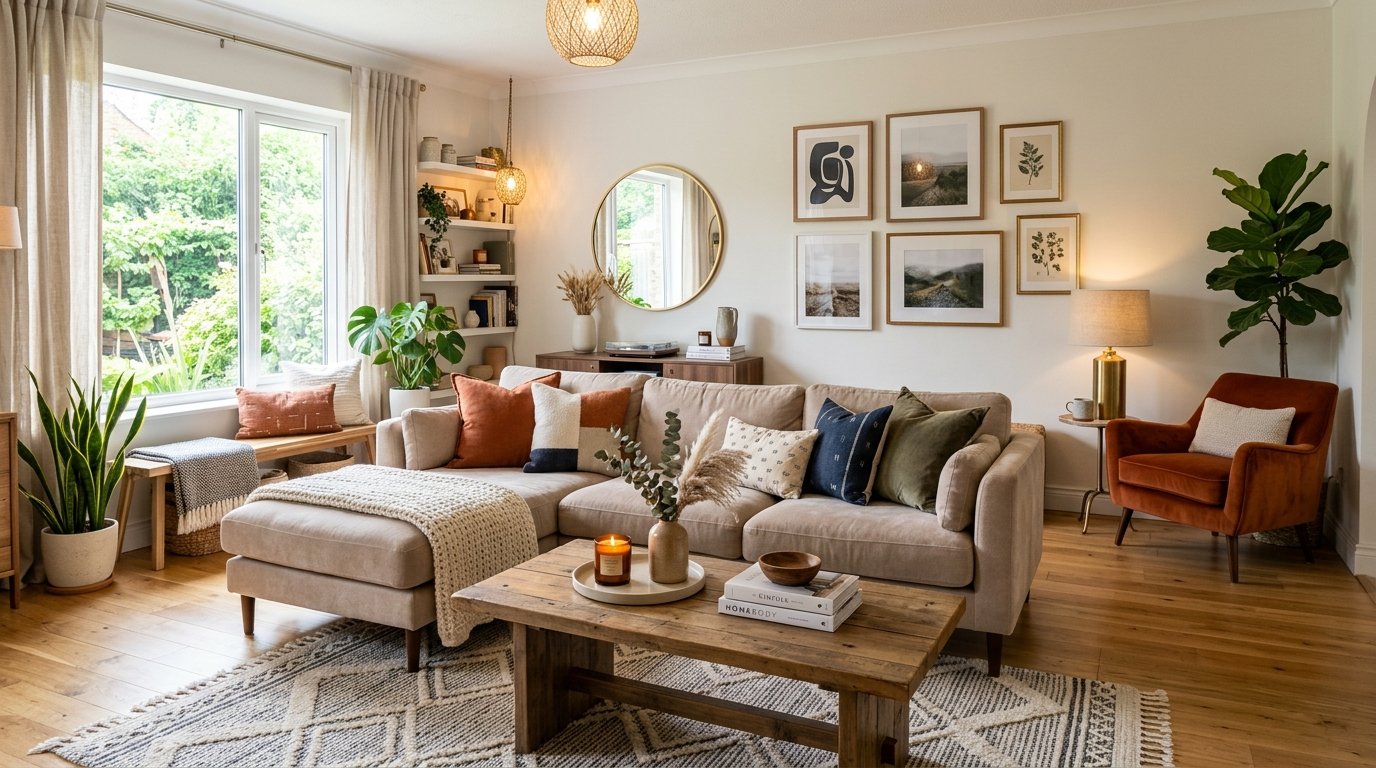
Living Room Decor Ideas to Create a Warm, Stylish, and Comfortable Home
Your living room is more than a place where a sofa, television, and coffee table happen to sit. It is often the room where everyday life unfolds: morning coffee, family conversations, movie nights, quiet reading, weekend guests, and those five minutes when you finally get to sit down after a long day. That is why good living room decor should do more than look attractive in a photograph. It should make the room feel comfortable, functional, welcoming, and unmistakably yours.
In 2026, living room design is moving strongly toward warmth, personality, natural materials, layered textures, and interiors that feel collected rather than perfectly coordinated. Houzz reports that homeowners are increasingly interested in warm palettes, tactile materials, personalized details, and spaces designed for long-term living rather than short-lived trends. Designers are also moving away from rigid minimalism and sterile white-and-gray rooms in favor of spaces with more character and visual depth.
The good news is that you do not need a huge budget or a completely new living room to achieve this look. Sometimes the biggest transformation comes from something surprisingly simple, such as changing the rug, rearranging the furniture, improving the lighting, or adding a few pieces with texture. Think of your living room like an outfit: the sofa might be the main piece, but the rug, lighting, artwork, cushions, plants, and accessories are what give the whole look personality.
How to Start Decorating Your Living Room
Before buying anything, take a step back and look at the room you already have. Measure the space, notice where the natural light enters, identify doors and walkways, and think about how you actually use the room. A beautiful living room that makes it difficult to walk from one room to another is not successful design; it is simply an attractive obstacle course. Start with function, then build the style around it.
It can also help to remove a few decorative objects temporarily. When a room is already filled with furniture and accessories, it becomes difficult to see what is missing because everything is competing for attention. Once the space is visually quieter, you can identify whether you need more seating, warmth, color, storage, artwork, or simply better spacing. This approach can save money because you may discover that the room does not need ten new decorations—it needs three carefully chosen changes.
Define the Feeling You Want
Ask yourself one simple question: How do I want this room to feel? Maybe you want a cozy living room that feels soft and relaxing. Perhaps you prefer a modern space with clean lines and a sophisticated atmosphere. You might want something colorful and energetic, or a natural room filled with wood, linen, plants, and earthy shades. There is no universal answer because the best living room decor is the style that supports the way you want to live.
Instead of choosing a design style simply because you saw it trending online, identify a few words that describe your ideal atmosphere. “Warm, calm, natural” will lead you toward very different choices than “dramatic, elegant, colorful.” Those words become your design filter. Whenever you consider a sofa, rug, lamp, artwork, or accessory, ask whether it supports the feeling you are trying to create.
Work With Your Existing Space
Your living room does not have to resemble a showroom. Work with the architecture you already have. If you have a fireplace, make it a focal point rather than trying to hide it. If your room has beautiful windows, keep them visually important. If the ceiling is low, avoid filling the room with unnecessarily tall furniture. If the room is small, prioritize pieces that provide several functions.
This mindset is especially useful when decorating on a budget. A room can feel completely different after moving the sofa, changing the position of the rug, introducing a floor lamp, and editing the accessories. Designers increasingly emphasize long-term livability and spaces that evolve with the people who live in them, rather than rooms designed purely around a fixed visual formula.
Choose a Living Room Color Palette
Color is one of the fastest ways to change the personality of a living room. You do not necessarily need to repaint every wall to introduce a new palette. Color can come through a rug, curtains, cushions, artwork, books, ceramics, flowers, or a statement chair. The trick is to create a relationship between the colors instead of scattering unrelated shades around the room.
A useful approach is to select one dominant color family, one supporting color, and one or two accent shades. For example, warm beige walls could work with a brown sofa, cream textiles, olive-green cushions, and natural wood. A neutral room could instead be energized with navy blue artwork, rust-colored pillows, and brass accents. When the colors repeat subtly throughout the room, the space feels intentional rather than randomly decorated.
Warm Neutrals and Earthy Colors
Warm neutrals are particularly useful when you want a living room that feels timeless without becoming boring. Cream, beige, taupe, camel, warm gray, terracotta, soft brown, and muted olive can create a comfortable foundation that works with many furniture styles. Current 2026 design reporting continues to show a movement toward warmer palettes, richer materials, and layered interiors.
Brown is especially interesting for anyone looking for an easy way to make a room feel warmer. Rather than using dark brown everywhere, consider walnut furniture, a chocolate-colored cushion, a brown patterned rug, or wooden picture frames. Recent design coverage has highlighted brown as a particularly strong color direction for fall 2026 because it adds warmth without requiring a complete room makeover.
Adding Color Without Overwhelming the Room
If you love color but are nervous about committing to a bright wall or colorful sofa, start small. A collection of blue cushions, a patterned rug, colorful artwork, or a single accent chair can introduce personality without taking over the room. You can always increase the amount of color later.
One useful trick is to repeat the same accent color in at least three locations. Imagine a living room with a cream sofa, natural wood furniture, and deep green as the accent. You could use green in a cushion, a piece of artwork, and a ceramic vase. The repetition creates visual rhythm and helps even strong colors feel connected.
Choose the Right Living Room Furniture
Furniture determines how your living room functions, so appearance should never be the only consideration. A sofa can be beautiful but uncomfortable. A coffee table can look stylish but leave no room to walk around it. An oversized sectional may look impressive in a large showroom but overwhelm a compact apartment.
Begin with the largest pieces and work downward. The sofa usually establishes the scale and visual direction of the room. Once its position is decided, add chairs, tables, storage, rugs, lighting, and accessories around it. This is much easier than purchasing individual pieces simply because you like them and then trying to make them work together afterward.
Make the Sofa the Foundation
The sofa is often the visual anchor of the living room, so choose it carefully. Consider its width, depth, height, fabric, color, and relationship to the walls and other furniture. If you want flexibility, modular or movable seating can be useful because the arrangement can change when you have guests or want to create more open floor space.
You do not always need to replace an existing sofa to refresh the room. A quality sofa can often be transformed with a new throw, cushions, a different rug, or a rearranged layout. Designers interviewed by The Spruce recently identified the sofa and area rug as particularly influential elements when a living room feels visually “off,” with the rug offering a potentially more affordable way to create a dramatic change.
Add Accent Chairs and Flexible Seating
Accent chairs can give the room another layer of personality while making conversations easier. Instead of automatically placing every chair against a wall, think about creating a conversational arrangement where people naturally face one another. Depending on your room, an upholstered chair, wooden armchair, bench, pouf, or ottoman can provide useful additional seating.
Flexible seating is especially valuable in small homes. A storage ottoman can act as seating, a footrest, and a place to hide blankets. A small stool can move around the room when needed. The best pieces are those that do more than one job without making the room feel like a storage area.
Create a Balanced Furniture Layout
Furniture placement can transform a living room without costing anything. Before moving heavy pieces repeatedly, sketch the room on paper or use a simple floor-planning application. Leave comfortable walking paths and make sure doors, windows, and important architectural features remain accessible.
Avoid pushing every piece of furniture directly against the walls simply because that seems like the safest option. In some rooms, bringing a sofa slightly away from the wall creates a more intimate seating zone. The goal is not to maximize empty floor space at all costs; the goal is to create a layout that feels natural when people actually use the room.
Use an Area Rug to Anchor the Room
A rug is one of the most powerful pieces of living room decor because it visually connects separate furniture pieces. A rug that is too small can make a room feel fragmented, while a properly scaled rug can make the seating area feel like one intentional composition. Designers continue to recommend generous rug sizes as an effective way to establish proportion and warmth.
Ideally, the rug should relate clearly to the main seating arrangement rather than appearing like a small island floating underneath the coffee table. If your budget allows, choose the largest size that comfortably fits the room and furniture. A patterned rug can also become the starting point for your color palette, allowing you to pull secondary shades from it for cushions, curtains, artwork, and accessories.
Layer Your Living Room Lighting
Lighting is one of the most underestimated elements of living room decor. A single ceiling fixture often produces flat, functional illumination but does little to create atmosphere. A more inviting room uses layers: general lighting for overall visibility, task lighting for reading or activities, and accent lighting to highlight artwork, shelves, plants, or architectural features.
Floor lamps, table lamps, wall lights, and decorative pendants can all contribute to the mood. Consider placing a floor lamp beside a reading chair, a table lamp on a console, and a small lamp on a side table. During the evening, several lower light sources can make a room feel considerably warmer than one bright overhead light.
Add Texture With Rugs, Pillows, and Throws
A room can have a beautiful color palette and still feel cold if everything has the same texture. Texture gives the eye something to explore. Think of the difference between a smooth leather sofa, a chunky knitted throw, a woven basket, a linen cushion, a wool rug, and a ceramic vase. Even when the colors are similar, the variety makes the room feel richer.
You do not need dozens of pillows and blankets. In fact, excessive accessories can quickly become clutter. Instead, combine a few contrasting materials and vary the shapes and patterns. Current design trends are moving toward tactile, sensory-rich interiors, with natural materials and layered textures playing an increasingly important role.
Decorate the Walls With Personality
Blank walls can make a living room feel unfinished, but decorating every available surface is not the answer. Choose wall decor that adds something meaningful to the room. A large piece of artwork can create a focal point above a sofa, while a gallery wall can tell a more personal story through photographs, prints, paintings, and objects collected over time.
Do not be afraid to mix frames and styles. A perfectly matched set can look polished, but an eclectic arrangement often feels more authentic. Current design trends increasingly favor spaces with history and personality rather than interiors that look as though every object was purchased from the same collection. Houzz’s 2026 research specifically highlights vintage pieces, handcrafted materials, original architectural details, and personalized objects as important elements in today’s interiors.
Bring Nature Into the Living Room
Plants can make a living room feel instantly more alive. A large floor plant can fill an empty corner, while smaller plants can soften shelves, windowsills, and side tables. If caring for plants is difficult, choose low-maintenance varieties rather than filling the room with artificial greenery simply for decoration.
Natural materials can create a similar effect. Wood, rattan, linen, stone, woven fibers, and ceramics add organic variation and help prevent neutral rooms from feeling sterile. Houzz’s recent trend reporting shows that natural materials are increasingly being appreciated for their texture, variation, and imperfections rather than only for their polished appearance.
Style the Coffee Table and Shelves
Coffee tables and shelves are where small decorative decisions become visible. Instead of placing many unrelated objects together, create small groupings with different heights and shapes. A coffee-table book, ceramic bowl, candle, vase, or small sculptural object can be enough.
The same principle applies to bookshelves. Mix books with artwork, ceramics, framed photographs, baskets, and plants rather than creating a wall of objects at exactly the same height. Leave some empty space. Negative space is not wasted space; it gives the objects around it room to breathe.
Living Room Decor Trends for 2026
The strongest living room trends in 2026 are less about copying one specific aesthetic and more about creating rooms that feel expressive, warm, and lived in. Homes & Gardens identifies relaxed shapes, playful color, personality-led interiors, and details with character among the year’s notable living room directions. Elle Decor similarly points to vintage pieces, pattern layering, decorative metals, tufted details, oversized lighting, and more expressive interiors.
Curves are another important direction. Rounded sofas, circular coffee tables, arched details, wavy shapes, and scalloped elements can soften rooms dominated by straight architectural lines. Houzz’s 2026 search data shows growing interest in curves and soft geometry across home design.
The bigger lesson is simple: do not decorate your living room as though it needs to pass a trend test. Use trends as ingredients, not as a recipe. A curved chair may be beautiful today and still look good years from now if it suits your room and personality.
Small Living Room Decor Ideas
A small living room needs careful editing rather than less personality. Start by choosing furniture that fits the scale of the space. A compact sofa with visible legs can sometimes make the floor feel more open, while nesting tables or an ottoman can provide flexibility without occupying permanent floor space.
Mirrors can also help reflect light and create a greater sense of openness, especially when positioned opposite windows or attractive light sources. Keep the palette relatively cohesive, but do not interpret “small” as “plain.” A small room can still have bold artwork, patterned cushions, beautiful lighting, and layered textures.
Storage is particularly important. Choose furniture that quietly performs multiple functions, such as an ottoman with hidden storage, a media console with drawers, or shelves that combine display and organization. The less visual clutter you have, the more intentional your decorative elements will appear.
Cozy Living Room Decor Ideas
A cozy living room should feel inviting before anyone even sits down. Soft lighting, comfortable seating, warm colors, layered textiles, and natural materials can all contribute to that feeling. A large rug under the seating area creates warmth underfoot, while throws and cushions make the sofa look ready to use rather than simply ready to photograph.
You can also create coziness through scale. A small lamp with warm illumination can make a corner feel intimate. A low coffee table can make a seating arrangement feel relaxed. Curtains that extend generously around a window can soften the architecture and make the room feel more complete.
Cozy does not mean cluttered. The most successful cozy rooms usually have enough empty space for the eye to rest. The goal is to create layers without creating visual noise.
Modern Living Room Decor Ideas
Modern living room decor does not have to mean an empty white room filled with sharp-edged furniture. Contemporary interiors are becoming softer and more expressive, combining clean architecture with warm woods, tactile fabrics, sculptural lighting, organic forms, and carefully selected decorative objects.
A modern room can use a restrained palette while still feeling rich. Imagine warm white walls, a walnut coffee table, a curved sofa, a textured rug, a sculptural lamp, and one large artwork. The room remains clean and contemporary, but it has enough texture and personality to feel comfortable rather than clinical.
For a stronger modern look, concentrate on silhouette. Choose a few pieces with distinctive shapes rather than filling the room with many small decorations. One oversized light fixture or sculptural chair can have more visual impact than a collection of ten small accessories.
Budget-Friendly Living Room Updates
You do not need to replace everything to refresh your living room. One of the easiest starting points is rearranging the furniture. Another is changing textiles: cushions, throws, curtains, and rugs can dramatically influence the room without requiring construction or expensive furniture.
Recent designer advice also emphasizes affordable changes such as repainting, peel-and-stick wallpaper, rearranging the floor plan, improving lighting, adding a rug, editing accessories, and introducing plants.
If you have a limited budget, prioritize changes according to visual impact. Start with the element that looks most wrong or dated rather than buying several small decorations simply because they are inexpensive. A new rug can sometimes transform an entire room more effectively than a shopping bag full of accessories.
Common Living Room Decorating Mistakes
One common mistake is choosing furniture that is too large for the room. Another is using a rug that is too small to connect the seating area. Poor lighting is another frequent problem because homeowners often think about lighting only after all the furniture and decorations are finished.
A second mistake is trying too hard to make everything match. Matching furniture sets can make a room feel predictable, while mixing complementary materials and finishes can create more character. Current design thinking strongly favors collected, layered interiors over rooms that look perfectly coordinated from a single catalog.
Finally, avoid decorating entirely around trends. If you love a particular style, use it. But give yourself permission to keep an older chair, a family photograph, a vintage table, or an object you simply love. A home should tell your story, not the story of whatever happens to be popular this month.
How to Make Your Living Room Feel More Personal
The most memorable living rooms usually contain something that could not have been copied perfectly from another home. It might be a collection of travel photographs, inherited furniture, handmade ceramics, favorite books, artwork from a local artist, or a strange little object that makes you smile every time you see it.
Personalization does not mean covering every surface with possessions. It means choosing meaningful pieces and giving them enough space to be appreciated. A single vintage mirror can have more personality than an entire shelf of generic accessories.
This is one of the clearest directions in 2026 interior design: homeowners are increasingly prioritizing authenticity and personal expression over designing solely for resale or following a prescribed aesthetic. Houzz’s latest reporting describes a shift toward character, history, natural materials, and homes that evolve around the people who live in them.
Conclusion
Great living room decor is not about buying the most expensive sofa, following every trend, or creating a room that looks untouched. It is about finding the balance between beauty and everyday life. Start with the layout, establish a comfortable color palette, choose furniture that fits the room, anchor the seating area with a properly scaled rug, and then build personality through lighting, texture, artwork, plants, and meaningful objects.
The direction of living room design in 2026 makes this approach especially relevant. Warm colors, natural materials, tactile textures, vintage details, curved forms, layered interiors, and personal objects are all gaining attention because they make rooms feel more human.
So, if your living room currently feels a little flat, do not assume you need a complete makeover. Move the furniture. Try a larger rug. Add a lamp. Bring in wood or woven texture. Replace a few cushions. Hang one piece of artwork you genuinely love. Sometimes a room does not need to become completely different; it simply needs to become a better version of itself.
FAQs
1. What is the most important piece of living room decor?
The sofa is usually the most influential furniture piece because it determines the scale, layout, and visual direction of the room. However, an area rug can have an equally dramatic effect because it connects the furniture and establishes the overall color and texture of the seating area.
2. How can I make my living room look expensive?
Focus on proportion, lighting, texture, and restraint rather than simply buying expensive decorations. A properly sized rug, layered lighting, quality-looking curtains, natural materials, cohesive colors, and a few distinctive accessories can make a room feel much more sophisticated.
3. What living room colors are popular in 2026?
Warm neutrals, earthy browns, terracotta, olive, warm whites, and other nature-inspired shades are prominent in current interiors. Brown in particular has received significant attention as a way to introduce warmth and depth without completely redesigning a room.
4. How do I decorate a small living room?
Choose furniture that is proportional to the room, keep walking paths clear, and use multifunctional pieces whenever possible. A cohesive color palette, strategically positioned mirror, appropriately sized rug, layered lighting, and limited but meaningful accessories can make a small living room feel larger and more intentional.
5. Are minimalist living rooms still popular?
Minimalism has not disappeared, but the direction of interior design is becoming warmer and more layered. Current 2026 reporting shows stronger interest in personality, natural materials, vintage pieces, texture, and collected interiors rather than extremely stark spaces.